
Most dress shopping goes wrong the same way. You shop by the size on the label, the dress arrives, and the shape was never right for your body in the first place. Of all the shapes on the rack, the A-line is the one that suits the widest range of bodies. Here is how to spot a good one before you order, what a good one costs, how to wear it, and five real ones worth buying.
How to spot a good one from the photos
Start with where the flare begins. On a true A-line it starts at the natural waist. If it starts lower, at the hips, the dress reads wide instead of A, and no size will fix that.
Then look at how the skirt hangs. Good fabric falls in soft folds. Stiff, cheap fabric stands away from the body like a lampshade, and it will do the same on you.
If the store has a video, watch the skirt when the wearer turns. A skirt with some weight swings and settles. A skirt with no swing is thin, and thin fabric clings to every line under it.
What a good one costs
Around $40, expect one layer of thin fabric and no lining. The skirt gets its shape from the cut alone, the seams are basic, and the zip can feel rough. It can still be a fair buy, as long as the cloth has some weight to it, but think of it as a season of wear, not years.
Around $90 is the sweet spot. The fabric has real weight, the top or the skirt is often lined, the seams sit clean, and the zip runs smooth. This is the level where the dress keeps its shape wash after wash instead of slowly giving up. Most of the dresses in this list sit in this band.
Around $200, you are paying for cloth and finishing: heavier crepe or natural fibres, a full lining, seams finished on the inside so nothing rubs, and prints matched where the pieces join. It drapes better and lasts for years. But be clear about what the money buys: the same shape, made properly. It is not a different dress.
So judge the price by the photos and the fabric notes, not the number. A heavy $60 dress beats a flimsy $140 one every time.
How to wear an A-line dress
Length decides the occasion. A mini A-line is a daytime and date-night dress. Knee length is the work-safe version. A midi is the most versatile of all, because it dresses up with heels and down with flats. A maxi in a dressy fabric is an event dress, and a good one if you are scanning christmas party dresses for December.
Fabric decides the rest. Cotton and linen read casual. Crepe and satin read evening. Denim sits happily in the middle.
Two styling rules cover most cases. Keep the waist visible: a fitted jacket or a blazer that ends at the waist works, while a long loose layer over the top hides the very line the dress is drawing. And if the dress is plain, a thin belt sharpens the waist even further.
5 A-line dresses worth your money
Real dresses, in the shape above, from stores that ship across the US.
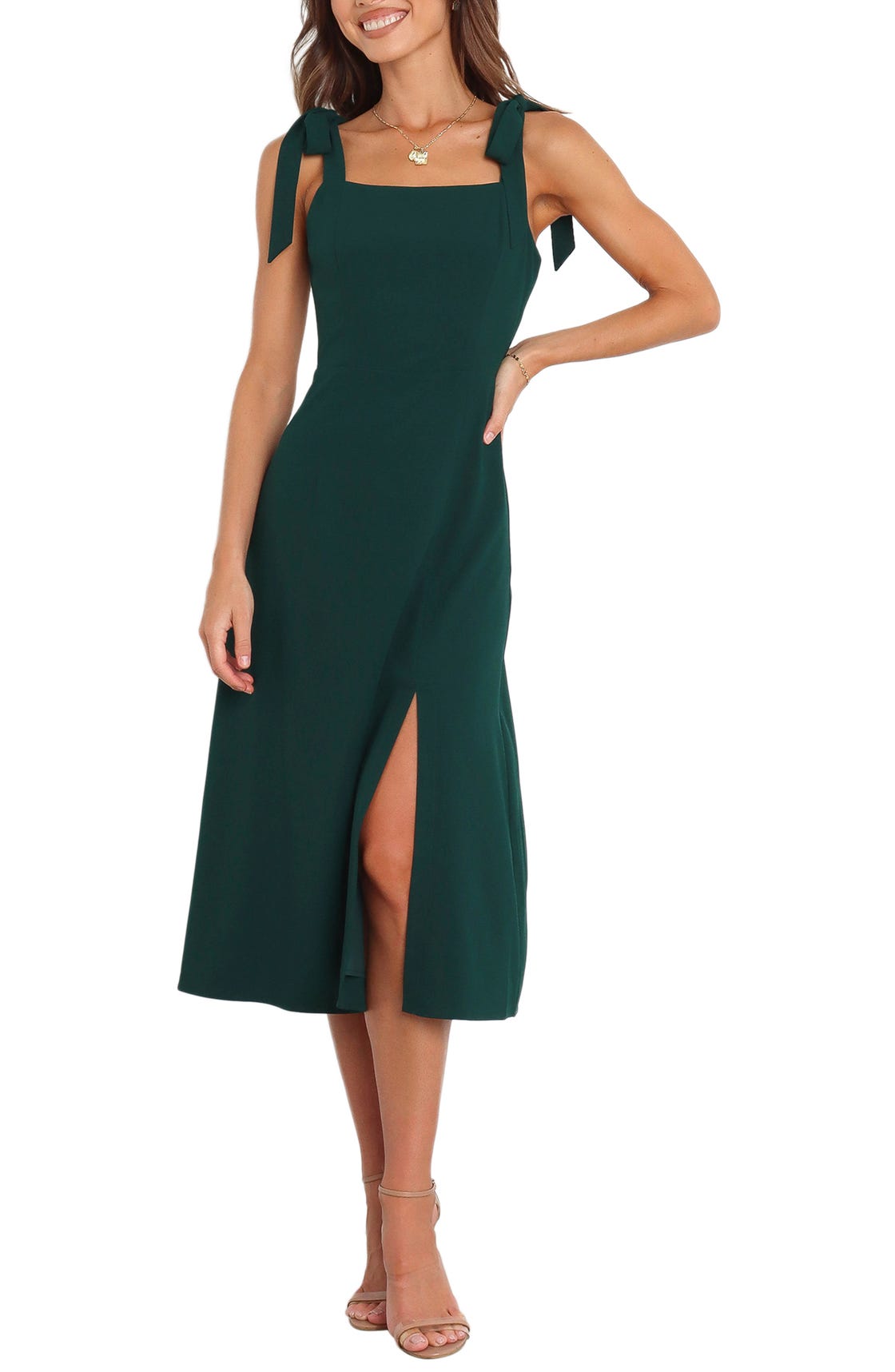
Laurel A-Line Dress, $89 at Nordstrom
A fitted mock-neck top with a flared above-knee skirt, the everyday version of the shape done well. It is the best reviewed dress on this list, with more than 300 reviews at 4.4 stars. Start here if you are buying your first A-line.
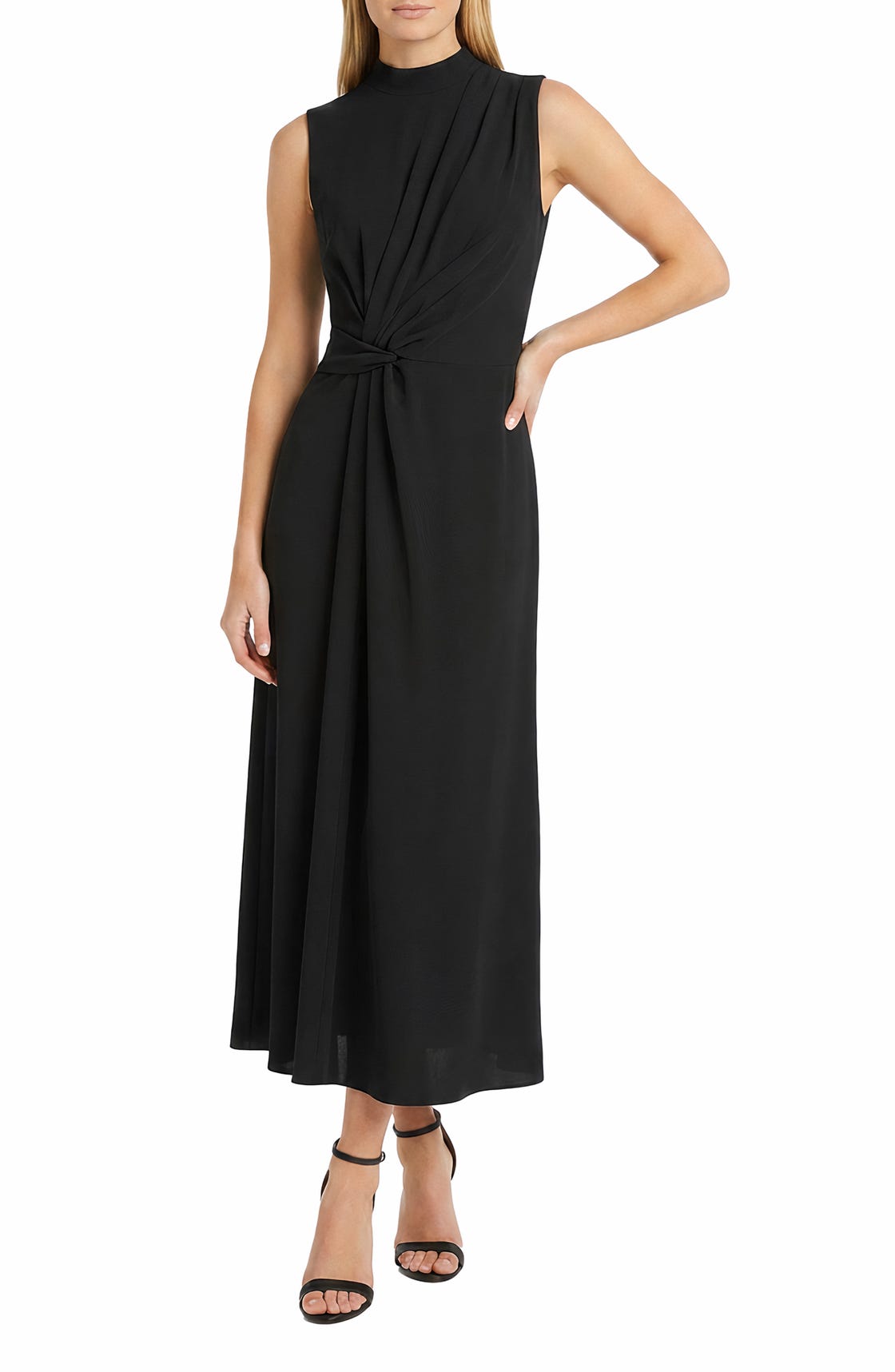
Pleated Sleeveless A-Line Dress, $118 at Nordstrom
The work one. A high neckline, a clean fitted waist and a pleated midi skirt that moves without being flimsy. Maggy London cuts dresses that last, and this one is rated 4.6 stars.
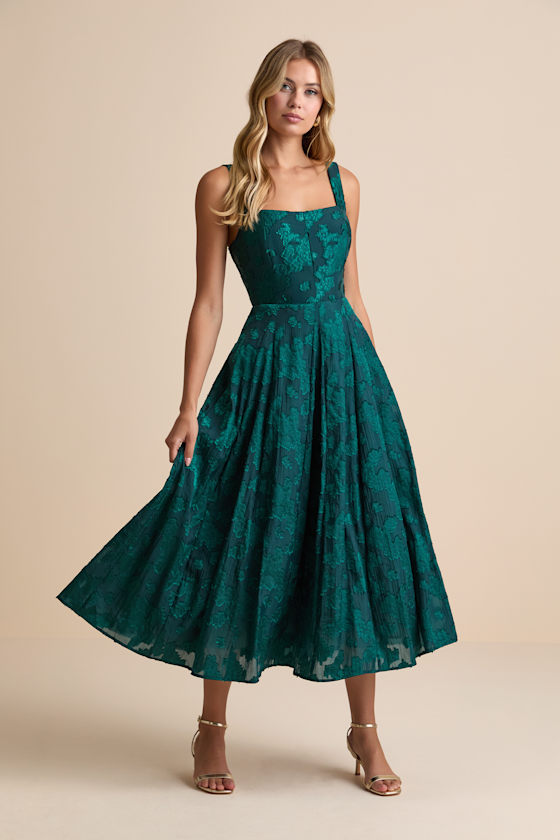
Loira Emerald Midi Dress, $79 at Lulus
The wedding guest pick. A very fitted natural waist, a fuller flared midi skirt, and a lace-up back in deep emerald green. Lulus counts it in its A-line range, and 99 reviews put it at 4.5 stars.
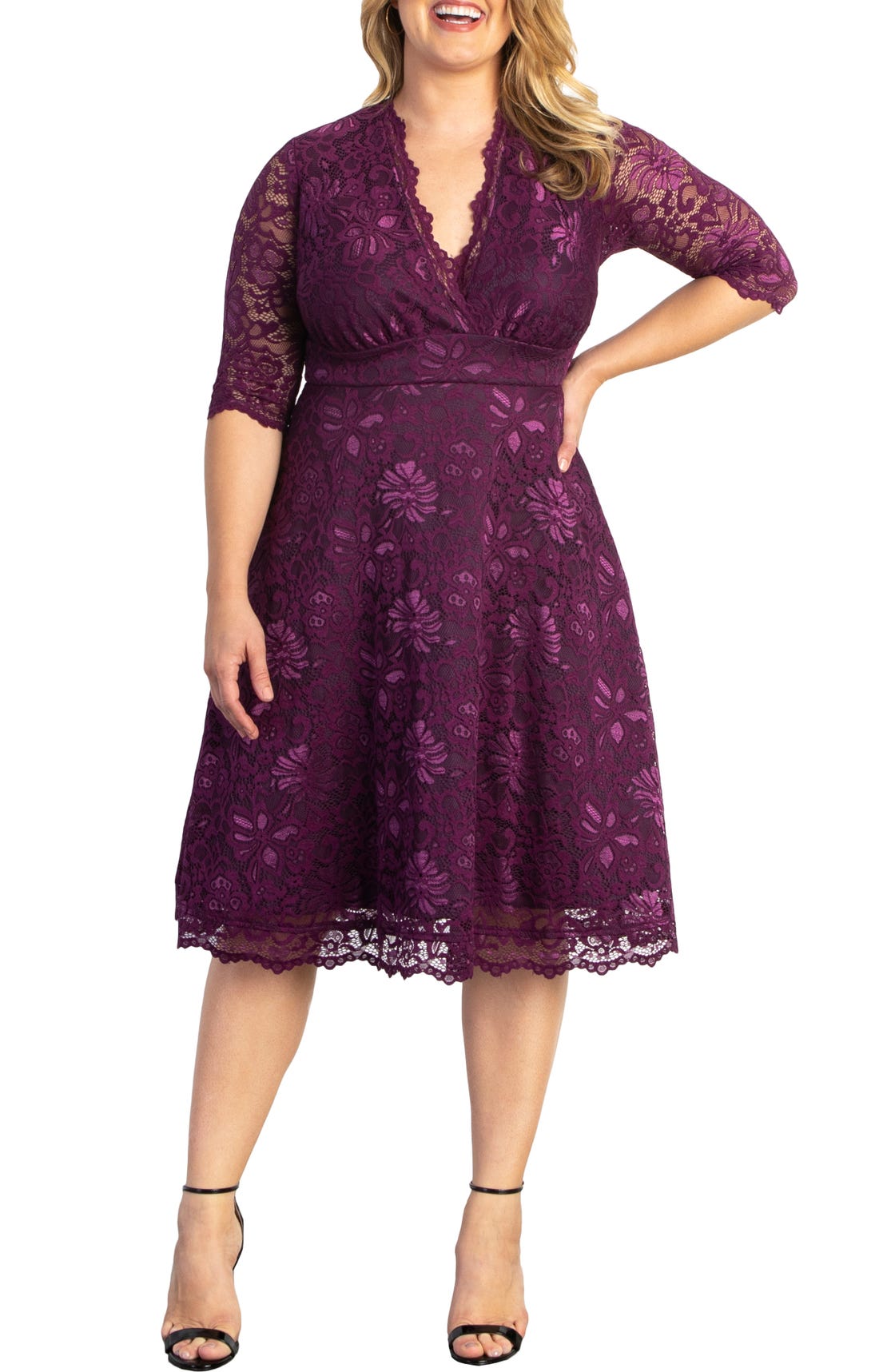
Mademoiselle Lace A-Line Dress, $168 at Nordstrom
The plus-size one, from Kiyonna, a brand that cuts only plus sizes, from 0X to 5X. Scalloped lace over the classic shape, cut for curves rather than sized up from a smaller pattern. This is the dress to send anyone who thinks the good shapes stop at a size 12.
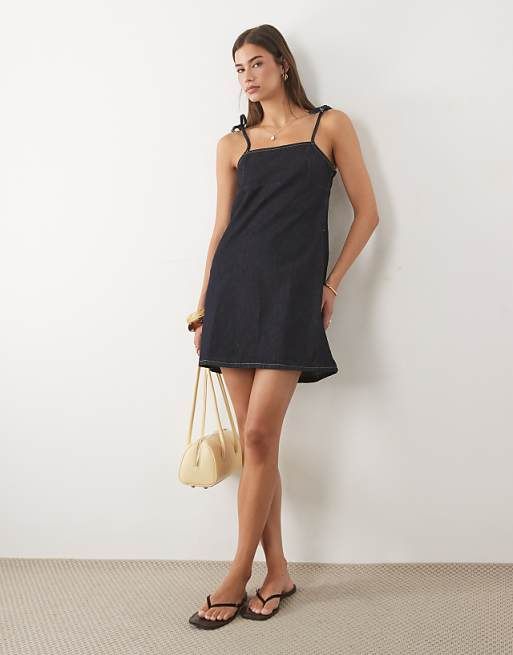
A-Line Mini Dress, $64.99 at ASOS
The budget one, and it is denim, which makes it the most wearable dress here. Fitted at the waist, flaring to the hem, in a dark rinse wash, in US sizes 4 to 12. Throw it on with boots and you are done.
One last thing: the shape gets you close, the numbers finish it
The right shape forgives a lot, but it cannot fix a wrong size. Measure your bust, waist and hips once, check those numbers against the store's own size chart, and if you sit between two sizes, size for the waist and let the flare handle the rest. If the store lists sizes from another country, run them through a free clothing size converter first. And when a dress makes the shortlist, see it on yourself before the order ships: that is exactly what the buttons above do.
Frequently asked questions
What is an A-line dress?
An A-line dress is fitted at the top and waist, then flares gently to the hem, making the outline of the letter A. The skirt falls in one smooth line, so it skims over hips and thighs instead of clinging.
Who does an A-line dress suit?
Almost every body type. It balances wider hips, shows off a defined waist, floats past the stomach, and draws a waistline on straighter figures. It is one of the most reliable shapes in plus sizes too.
What is the difference between an A-line dress and a fit and flare dress?
A fit and flare dress is tight through the waist with a fuller, often gathered skirt that kicks out. An A-line flares gently in one smooth, unbroken line from the waist, which makes it softer and easier to wear.
Can you wear an A-line dress to a wedding?
Yes. Pick a midi or maxi length in a dressier fabric like satin, crepe or lace, and avoid white and ivory unless the couple says otherwise. The shape itself is classic wedding guest wear.
Is an A-line dress good for plus-size figures?
Yes. The fitted top gives structure and the flare gives room, so nothing pulls across the hips or stomach. Look for brands that cut the size range properly rather than grading up a smaller pattern.
How should an A-line dress fit?
Snug at the shoulders and waist, then free from the waist down. If it pulls across the waist it is too small; if the waist is loose, the whole shape disappears, so size for the waist first.