
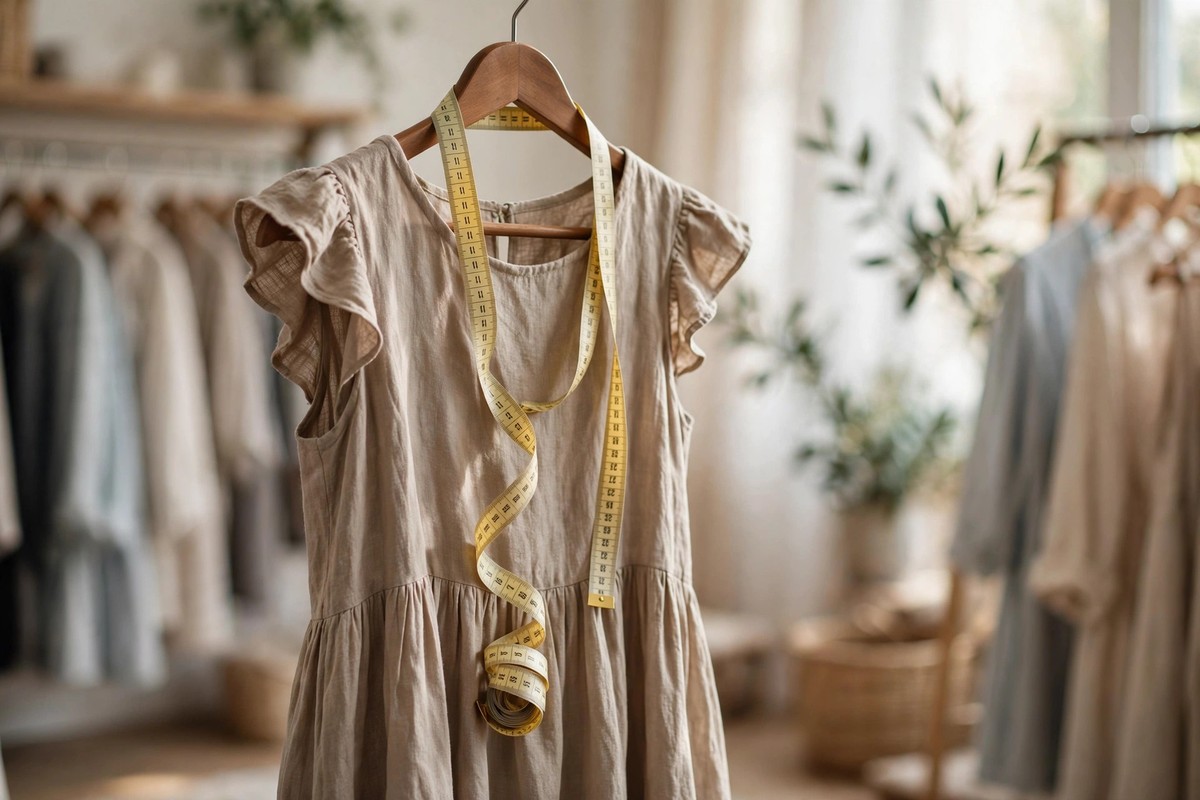
Here is a question worth sitting with: when was the last time you bought clothes online and opened the size chart?
If you are honest, the answer is probably "rarely" or "never." You picked your usual size, skimmed the reviews, maybe checked what size the model was wearing, and clicked buy. Your customers do the exact same thing. The size chart sitting on your product page, the one you measured and formatted and worried over, gets opened by a small fraction of shoppers and trusted by even fewer.
This is not an attack on size charts. They have a job. But if you are counting on yours to prevent returns, you should know what it can and cannot do, and what your customers reach for instead.
What merchants say actually happens
Ask boutique owners and a consistent picture emerges. One merchant on the Shopify forums put it bluntly: under 15% of shoppers actually look at the size chart, and no chart in the world fixes the real problem. Another said customers treat the chart as a last resort, something they open only after the dress they guessed on does not fit.
Think about why. A size chart is a grid of numbers: bust 34, waist 27, hips 37. To use it, a shopper has to know their own measurements, trust that your numbers were taken the same way theirs were, and believe that numbers on a screen translate into how fabric sits on a body. That is three leaps of faith before breakfast. Most shoppers will not make one of them, let alone all three.
And then there is the deeper issue: numbers do not describe fit. A 36-inch bust tells you nothing about whether the bodice runs snug, whether the fabric has stretch, whether the waist hits at the natural waist or two inches below it. Two dresses with identical chart numbers can fit completely differently. Shoppers have learned this from experience, which is why so many of them stopped opening the chart years ago.
What customers do instead of reading the chart
If they are not reading your chart, what are they doing? The same things you do.
They pick their usual size and hope. This is the default move. It works fine until it doesn't, which is exactly when the return happens.
They read the reviews. A review that says "runs small, size up" carries more weight than any chart, because it comes from a real person with a real body. Reviews are the crowd-sourced fit notes your chart wishes it could be.
They check the model. "Model is 5'9" and wears a size 4" is probably the single most-used fit signal in online fashion. Shoppers compare their own body to the model's and make their best guess. It is crude, but it is visual, and visual beats numerical every time.
They order two sizes. When the guess feels too risky, especially for an event, they hedge: order both, keep one, send one back. If you have ever wondered why your size chart didn't prevent bracketing, this is why. We wrote about that pattern in detail in our guide on how to stop customers ordering two sizes and returning one.
They ask a friend, or they just leave. Some shoppers text a photo to a friend. Others quietly close the tab. You never hear from the ones who leave, but they are the most expensive group of all.
Notice what all of these have in common: every one of them is a workaround for the same missing thing. The shopper wants to know how the dress will look on them, and the chart does not answer that question.
Why charts fail even when they are accurate
Let us steelman the size chart for a moment. Suppose yours is perfect: professionally measured, clearly formatted, mobile-friendly. It can still fail, for reasons that have nothing to do with your effort.
Sizing is inconsistent across brands. Your size 8 is another store's size 6. Shoppers know this, so even a perfect chart gets discounted against the suspicion that the numbers don't mean what they think.
Bodies are not numbers. Two customers with the same bust, waist, and hip measurements can have completely different shapes. Charts flatten all of that into three numbers and hope for the best.
Fit is about fabric and cut, not just dimensions. Stretch, drape, lining, boning, the cut of the armhole: none of this lives in a chart, and all of it determines whether the dress works.
On mobile, charts are a chore. Most of your traffic is on a phone. Pinching and zooming a measurement grid on a small screen is friction, and friction is where sales go to die.
None of this means you should delete your size chart. It means you should stop expecting it to do a job it was never built for. A chart is a reference document. What your customer needs is an answer.
What actually answers the fit question
If the chart is a reference, what is the answer? Everything that works has one thing in common: it shows rather than tells.
Fit notes in plain language. One honest sentence per product, written the way your best in-store associate would say it: "Fits true to size, but the bodice runs snug, so if you are between sizes, take the larger one." This is the highest-leverage sentence on your product page. We covered the tactic in depth alongside other bracketing fixes, including what to do when your customers are always between sizes.
The model's measurements, not just the size worn. "Wears size 4" helps. "5'9", 34-26-36, wears size 4" helps more. It gives the shopper actual data points to compare against.
Real garment measurements. Not chart numbers: the actual pit-to-pit, waist, and length of the dress in your hands. Customers who know their own measurements live by these.
Photos that show fit, not just fashion. A front view on a real body, in good light, tells a shopper more than any grid. Where does the waist hit? Does the fabric pull? How long is it really?
Letting them see it on themselves. This is the end of the road for guesswork. When a shopper uploads a photo and sees your dress on their own body, every workaround above becomes unnecessary. No chart to decode, no model to compare against, no second size to hedge with. Virtual try-on built for Shopify puts a "Try It On" button under your add to cart and answers the fit question in seconds.
The bottom line
Your size chart is not useless. Keep it, keep it accurate, and the minority of shoppers who measure will thank you. But stop treating it as your fit strategy. The vast majority of your customers will never open it, and the ones who do will still guess.
The boutiques winning on fit are not the ones with the prettiest charts. They are the ones that answer the real question every shopper is asking: how will this look on me? Answer that, in words, photos, or better yet on their own body, and the chart becomes what it should have been all along: a backup, not the plan.
Frequently asked questions
Should I remove the size chart from my product pages?
No. Keep it, and keep it accurate. A minority of shoppers do measure themselves and rely on it, and removing it would frustrate them. The point is not that charts are worthless, it is that they cannot carry your whole fit strategy. Treat the chart as a reference for the few, and build your real fit confidence with notes, photos, and try-on for the many.
Why don't shoppers trust size charts even when the numbers are right?
Because they have been burned too many times. Sizing varies wildly between brands, so a shopper's "usual size" means different things in different stores. Add in the fact that numbers don't capture shape, stretch, or cut, and the chart starts to feel like a promise the product can't keep. Trust, once lost, is hard to win back with a grid.
Do reviews really work better than size charts for fit questions?
For most shoppers, yes. A review that says "I'm 5'6", usually a 10, and the 12 fit perfectly" gives a concrete data point from a real body. It is specific, visualizable, and social. Charts give abstractions; reviews give examples. That is why smart boutiques feature their most detailed fit reviews prominently instead of burying them.
What is the single highest-impact fit sentence I can add to a product page?
Something like: "Fits true to size, but the bodice runs snug, so between sizes, take the larger one." One honest, specific sentence about how this particular garment behaves beats a whole chart. Write it the way your best salesperson would describe the fit to a customer standing in front of them.
How do I handle fit for customers who never measure themselves?
Meet them where they are: visuals and plain language. Show the dress on a real body with the model's height and size worn, write a one-sentence fit note, and if you can, let them see it on themselves with virtual try-on. Nobody is going to start carrying a tape measure because your chart asked nicely. Remove the need for measurements instead of demanding them.
If hardly anyone reads size charts, why does every store still have one?
Partly habit, partly expectation: shoppers expect to see one, and its absence can feel like something is missing, even if they never open it. Partly hope: every boutique owner wishes the chart would do more work than it does. Keep yours as a trust signal and a reference. Just don't mistake its presence for a fit strategy.